

Do Weighted Stuffed Animals Help with Anxiety? What to Know
They're all over social media: chunky, huggable plush animals that promise to melt away stress the moment you pick one up. If you've found yourself wondering whether they live up to the hype — do weighted stuffed animals help with anxiety, or are they just a cute trend? — you're asking the right question. The honest answer is a qualified yes: for many people, a weighted plush really does feel calming, and there's a sensible reason why. Here's what's actually going on, who tends to benefit, and — just as important — what a weighted plush can't do.

What is a weighted stuffed animal?
A weighted stuffed animal is exactly what it sounds like — a plush toy made deliberately heavier so that holding it delivers a gentle, even pressure. Most sit somewhere between about one and five pounds, light enough to cuddle but heavy enough that you feel a reassuring weight in your arms or across your lap. Beyond the extra heft, they look and feel like any beloved plush, which is part of the appeal: comfort that doesn't announce itself as a "wellness tool."
How weighted stuffed animals work: deep pressure
The idea behind weighted plush isn't new — it's the same principle as a weighted blanket, or the swaddle that settles a newborn. It's called deep pressure stimulation: firm, steady, even pressure on the body that tends to feel calming and grounding. Think of the difference between a light, ticklish touch (which can feel alerting, even irritating) and a slow, firm hug (which helps you settle). A weighted plush recreates that hug-like pressure in a portable, approachable form.
It's worth being straight about the evidence, though. Deep-pressure touch has a reasonable amount of support as a calming strategy, and it's widely used by occupational therapists. But rigorous research specifically on weighted stuffed animals is still limited, and honest sources say so. So the fair way to put it is this: many people find weighted plush genuinely soothing, and the underlying mechanism is well-established — but it's a comfort tool, not a proven medical treatment.
Who tends to find them helpful?
Weighted plush appeal to a wide range of people, and their portability is a big reason why — a plush is easy to keep close in situations where a blanket would be impractical. People often reach for them for:
- Everyday stress and winding down — holding one during a tense moment, a long study session, or while watching TV.
- Sleep — that cozy, grounded feeling can make it easier to relax at bedtime for people who find some weight soothing.
- Sensory support — many people with sensory processing differences, ADHD, or autism find the steady input comforting and organizing.
- Focus — a consistent sensory anchor on the lap can help some people settle enough to concentrate.
And they're not just for kids. Teens tuck them into a backpack for discreet comfort between classes, and plenty of adults keep one on the couch, at a desk, or by the bed. If you already use fidget tools to take the edge off, a weighted plush works on a related idea — our piece on whether fidget toys really help with anxiety is a good companion read, and the deep-pressure approach shows up again in our guide to calming sensory activities.
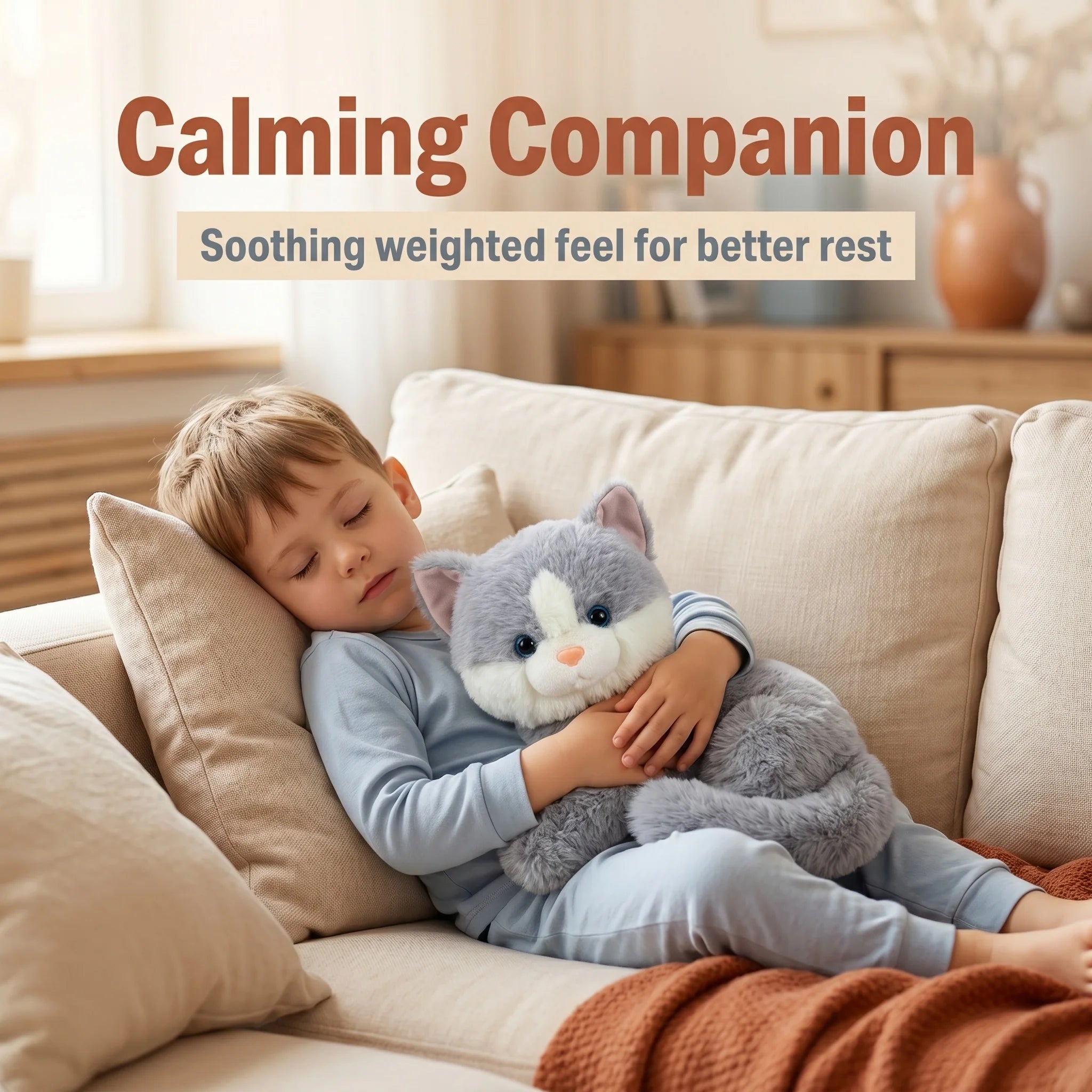
What a weighted plush can't do
This is where a lot of online hype gets it wrong. A weighted stuffed animal is not a cure for anxiety, and it isn't a substitute for professional care. It's a small, comforting tool that may help you feel calmer in the moment — nothing more, and there's real value in that, but it's important to keep expectations honest. It also isn't for everyone: some people find the weight soothing, while others feel hemmed in by it. Personal preference matters, so it's fine if it isn't your thing.
If anxiety is regularly interfering with your daily life — your sleep, your relationships, your ability to do the things you need to do — please treat that as worth real support. A doctor, therapist, or (for sensory needs in particular) an occupational therapist can help in ways a plush simply can't. Think of a weighted plush as one comforting item in a bigger toolkit, not the toolkit itself.
How to use a weighted plush
There's no wrong way, but a few simple habits get the most out of one: rest it across your lap while you work or study, hug it or drape its arms around your shoulders while you unwind, keep it nearby during TV or reading, or make it part of a calming pre-sleep routine. The long-arm styles are especially nice for this — the weighted arms wrap around you for a hug-like squeeze rather than just sitting in your lap.
A note on age and safety
A couple of practical points matter here. Weighted products should be something the person can lift, move, and reposition entirely on their own, and they should never restrict anyone's movement or breathing. Keep them away from pets that might chew the fill, and check seams and closures now and then with regular use.
Age matters too. Our weighted plush line, including the Dog, Cat, and Dinosaur styles, is rated for ages 14 and up, so it's designed with teens and adults in mind — not toddlers or young children. For a younger child with sensory needs, weighted items should be chosen carefully for their age and size, and ideally with guidance from an occupational therapist.
Finding the right one
If you'd like to try one, the main things to weigh are the weight itself and the size. Our weighted plush line comes in a 12-inch version (around a pound, weighted in the body) and a larger 25.5-inch version (around two pounds, weighted in the arms for that draped-hug feel), it's CE certified, and it comes in eight characters from a koala to a dinosaur to a Highland cow. For a full walkthrough of size, weight, and character options, see our guide on how to choose a weighted plush, or browse the full plushies collection to see every character and size.
So — do weighted stuffed animals help with anxiety? For a lot of people, holding a weighted plush is a small, real comfort, thanks to the calming effect of deep pressure. Keep your expectations grounded, choose one that suits you, and let it be exactly what it is: a cozy companion for the moments you need one.
Frequently asked questions
Do weighted stuffed animals actually work for anxiety?
Many people find them genuinely calming. They use deep-pressure stimulation — firm, even pressure that tends to feel soothing and grounding, the same idea behind weighted blankets. That said, research specifically on weighted stuffed animals is limited, so they're best thought of as a comfort tool that may help, not a proven treatment or a cure.
How heavy should a weighted plush be?
Most weighted stuffed animals fall between about one and five pounds. Lighter ones (around a pound or two) are easy to carry and cuddle, while heavier ones give more noticeable pressure. The right weight is mostly personal preference — pick what feels comforting rather than restrictive, and make sure you can lift and move it easily on your own.
Are weighted stuffed animals good for adults?
Yes. Weighted plush aren't just for kids — teens and adults use them at home, at a desk, during commutes, or before bed. They're a portable, low-profile way to get the calming pressure some people love in a weighted blanket, without covering the whole body.
Are weighted stuffed animals safe for young children?
It depends on the specific product's age rating and the child. Our weighted plush line is rated for ages 14 and up, so it's intended for teens and adults. For younger children with sensory needs, weighted items should be chosen for their age and size and ideally guided by an occupational therapist, and should never restrict a child's movement or breathing.
Weighted plush or weighted blanket — which is better?
They work on the same deep-pressure principle but suit different situations. A weighted plush is lighter, targeted, and portable — great for travel, school, or the couch. A weighted blanket is heavier and covers the whole body, which some people prefer at night (though others feel too enclosed). Many people happily use both.